The Perfect Storm of 2026: AI Bubble, Sovereign Debt and the Financial Calendar

It’s hard to predict the dynamics of financial markets, let alone the possibility of a systemic collapse, on just a few causes or actors. Recent history shows that major financial crises tend to share a common pattern: several storms that have been quietly building, or that most investors have chosen to ignore, end up colliding within a very short span of time. That simultaneity is what turns an ordinary correction into a systemic collapse, much like in “The Perfect Storm (2000).” What I want to do with this article is point at the “elephant in the room” that many analysts and fund managers have been flagging for months: the convergence of several risk factors heading into the second half of 2026, which could produce a “perfect storm” in financial markets.
A Warning That Isn’t New
It’s tempting to think that concern over an AI bubble is a recent phenomenon, born with the BIS report of June 2026 [1][2], but that isn’t the case: critical, dissenting voices have been warning about the existence of a bubble for years. Let’s walk through the timeline to understand that today’s alarm is the culmination of a long-running debate, not a sudden shock.
On June 28, 2026, the Bank for International Settlements (BIS), nicknamed “the central bank of central banks,” published its Annual Economic Report with the harshest warning ever issued by an institution of this stature [1][2]. The BIS found that corporate AI investment in the United States has multiplied 4.5 times in just three years, a pace that outstrips any other investment boom on record, including the 19th-century railway mania, the electrification of the 1920s, or the dot-com bubble of the 1990s [3].
Michael Burry, famous for predicting the 2008 mortgage crisis and the inspiration behind the film The Big Short, had already warned back in November 2025 that Big Tech stocks such as Nvidia and Palantir were overvalued, and bet against them by buying put options, wagering that their prices would fall [4][5]. In his Substack newsletter, Burry explained that these companies were artificially inflating reported earnings without any real operational improvement behind them [6][7].
Around the same time, JPMorgan CEO Jamie Dimon warned of a meaningful chance of a stock market correction in the coming months, drawing parallels with past tech bubbles, such as the dot-com bust of the 1990s, and noting that most investors who rode those bubbles came out worse off [9][10].
The BIS report of June 2026 isn’t the first alarm bell; it simply gives the warning institutional weight as a central-bank diagnosis.
The AI Bubble
The five largest tech companies by market capitalization (Alphabet, Google’s parent; Amazon; Meta; Microsoft; and Oracle) are expected to spend more than a trillion dollars on AI infrastructure between 2025 and 2026, a figure that, according to Morgan Stanley, already exceeds the peak capital intensity seen during the dot-com bubble, and has forced several of them to take on heavy debt just to keep up the pace of investment [11][12]. The BIS report itself warns that sharply inflated valuations, sitting on top of loose financial conditions, could collapse suddenly if interest rates rise or if AI fails to deliver the profitability that currently justifies its stock market price [3]. On top of that, software companies that poured money into AI and laid off developers en masse during 2025 are now grappling with steep “token” costs and questioning whether the productivity and profitability gains that justified that spending will actually materialize: even though the cost per token has fallen more than 90% since 2022, per-developer consumption has surged so much that it has tripled real bills for many companies compared with what they had budgeted [13][14]. To understand why this concentration of risk is so worrying, it helps to unpack the specific financial mechanism at play.
The most cited case is the deal between Microsoft and OpenAI: Microsoft secured a 27% stake in the lab in exchange for a commitment to spend 250 billion dollars on its Azure cloud platform [15]. Oracle struck a similar deal worth 300 billion [16], and Amazon committed up to 25 billion in Anthropic in exchange for the latter spending more than 100 billion on AWS over the next decade [17]. J.P. Morgan Asset Management has acknowledged that this circularity echoes the vendor-financing practices that helped inflate the telecom bubble of the late 1990s [18].
The underlying problem, according to the framework popularized by Sequoia Capital’s David Cahn in his essay “AI’s $600B Question” (2024), still cited today as a reference point in the 2026 debate, is what he himself dubbed “the $600 billion question”: the gap between the revenue AI currently generates and the scale of infrastructure investment required to sustain that growth [19]. The BIS reaches a similar conclusion: it warns that fierce competition among tech giants is pushing them to commit resources to projects whose returns remain uncertain, and that if profitability expectations disappoint, funding could suddenly dry up, turning today’s investment boom into a prolonged investment bust with contagion effects on broader financial conditions [3].
This is where everything converges. When a company buys a server, it doesn’t book the expense all at once. Instead, it spreads it out, or depreciates it, over however many years it estimates the machine will remain useful. If a 1,000-dollar machine depreciates over four years, the annual expense reported is 250 dollars; if that same company decides the machine now lasts six years, the annual expense drops to 166 dollars, even though nothing has actually changed except the timeline the company itself set. Microsoft, Google and Meta revised these useful-life estimates (presumably on purpose) to flatter the net income figures they report, without any real operational improvement behind the change. While technically legal, Burry singled this out as one of the reasons he believes these companies’ valuations are inflated, warning too that the risk of hardware becoming obsolete sooner than expected is real, and will likely hit well before hardware makers “want” it to [7].
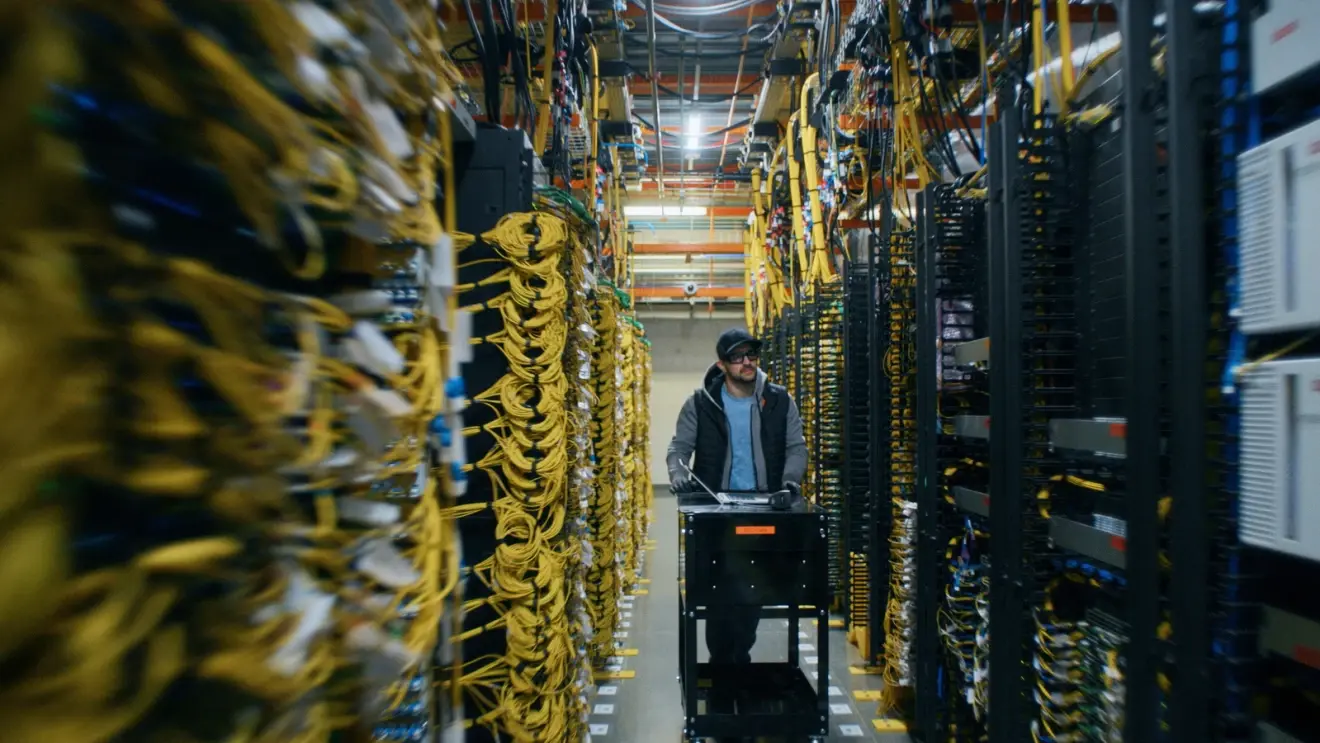
There’s an additional risk factor worth adding to the mix: in recent years, the sheer demand for hardware driven by AI has strained supply chains so much that it has caused shortages, price hikes and, above all, delivery delays. As a result, many companies have taken to placing duplicate orders with different suppliers, intending to keep whichever shipment arrives first and cancel the rest to make sure they get the hardware on time, a practice already well documented in the semiconductor industry during previous shortage episodes [20]. This has created a cushion of orders that is currently propping up hardware makers’ valuations, but which could deflate as global production normalizes, dragging those valuations down with it.
Will It Happen in October?
Beyond AI, there’s a second layer of risk to consider, one that has nothing to do with any particular technology, but with the internal workings of the financial market itself. Many US mutual funds close their fiscal year on October 31, which forces fund managers to carry out “portfolio window-dressing” in September: selling off positions with accumulated gains or elevated risk to present a more conservative-looking balance sheet to their investors. On top of that, pension funds and index funds rebalance their portfolios automatically every quarter, which can trigger massive single-day asset sell-offs regardless of what the market actually thinks of those assets.
This pressure coincides with September’s “triple witching”: the simultaneous expiration of stock options, index options and index futures, which falls on the third Friday of that month. Historically, this expiration date has acted as a catalyst for volatility and market drops, especially when it coincides with other risk factors. Add to that the fact that September tends to be a “bad” month for markets, and you get yet another storm brewing on the horizon.
The IPO Queue

The next storm set to converge with the others is the pile-up of AI company stock listings, which has been dubbed an IPO “supercycle.” SpaceX kicked off the cycle with its listing in June 2026, which became the largest IPO in US history [21][22]; still pending are Anthropic and OpenAI, whose listings could coincide in the fall of 2026.
This wouldn’t matter much on its own, if it weren’t for the fact that, in SpaceX’s case, the 180-day “lock-up” period for insiders expires at the end of November, and there are fears that many of these investors, who were able to buy shares at very low prices during the private phase, may rush to sell in search of liquidity. Recall that none of these three companies meets the GAAP profitability requirements needed for immediate inclusion in the S&P 500, which means automatic buying from index funds isn’t there yet, and the volume of insider selling could vastly outweigh buying demand, dragging share prices down.
If something like that were to happen, Anthropic and OpenAI could be forced to postpone their listings until 2027, setting off a domino effect on AI company valuations.
The Storm of Storms
As it happens, all these risk factors, or “storms,” coincide within a very specific window of time, and against the backdrop of an already fragile macroeconomic environment. The International Monetary Fund (IMF) has warned that US public debt is unsustainable over the medium term, projecting it will reach 140% of GDP by 2031 if the current fiscal trajectory isn’t corrected [27]. This fiscal fragility compounds the risks tied to AI investment and the possibility of a persistent rebound in inflation, creating an environment where any shock could see its effects amplified [28].
If central banks decide to keep interest rates high to rein in inflation, or even raise them further in response to an unexpected spike, financing the data centers AI needs becomes far more complicated. The BIS makes this point directly in its report: tighter monetary policy could trigger “an eventual reversal of investment that spills over into broader economic recessions” [3].
The strength of this hypothesis doesn’t lie in any single factor on its own, but in the possibility that they all land within a very narrow window toward the end of 2026, against a backdrop of warnings that have been piling up for some time now: the drying-up of funding for AI startups, mass cancellations of AI hardware orders, September’s mechanical sell-offs, and the expiration of SpaceX’s lock-up. The BIS itself warns that existing financial vulnerabilities could amplify any shock [2], which means this cocktail of risk factors could trigger one of the biggest financial crises in recent history: a genuine “perfect storm.”
References
- Bloomberg: “AI Bust Risks Ripple Effects From Growth to Credit, BIS Says” (Jun. 28, 2026). https://www.bloomberg.com/news/articles/2026-06-28/ai-bust-risks-ripple-effects-from-growth-to-credit-bis-says
- Euronews: “The AI boom propping up markets could trigger the next crash, central banks warn” (Jun. 28, 2026). https://www.euronews.com/business/2026/06/29/the-ai-boom-propping-up-markets-could-trigger-the-next-crash-central-banks-warn
- The Wall Street Journal: “BIS Sees Peril for Economy, Financial System in AI Investment Boom” (Jun. 28, 2026). https://www.wsj.com/economy/bis-sees-peril-for-economy-financial-system-in-ai-investment-boom-326960fb
- Outlook Business: “‘The Big Short’ Michael Burry: Man who Predicted 2008 Crisis Is Now Betting Against AI” (Nov. 12, 2025). https://www.outlookbusiness.com/artificial-intelligence/the-big-short-michael-burry-man-who-predicted-2008-crisis-is-now-betting
- Business Insider: “‘Big Short’ Michael Burry Discloses Bets Against Nvidia, Palantir” (Nov. 25, 2025). https://www.businessinsider.com/big-short-michael-burry-substack-nvidia-memo-depreciation-ai-bubble-2025-11
- Yahoo Finance: “Here’s How Michael Burry’s Shorts Are Doing So Far in 2026” (Feb. 13, 2026). https://finance.yahoo.com/news/michael-burry-shorts-doing-far-174839022.html
- Business Insider: “‘Big Short’ investor Michael Burry says Nvidia’s memo was ‘disappointing,’ and he’s betting against it and Palantir” (Nov. 26, 2025). https://www.businessinsider.com/big-short-michael-burry-substack-nvidia-memo-depreciation-ai-bubble-2025-11
- TradingKey: “‘Big Short’ Burry Doubles Down: Nvidia, Palantir Short Positions” (May 9, 2026), detailing 1,000,000 Nvidia shares at a $110 strike price. https://www.tradingkey.com/analysis/stocks/us-stocks/261877483-michael-burry-ai-bubble-short-nvidia-palantir-options-valuation
- Yahoo Finance / Fortune: “Markets look unstoppable, but JPMorgan CEO Jamie Dimon sees a 30% chance of a correction” (Oct. 9, 2025). https://finance.yahoo.com/news/markets-look-unstoppable-jpmorgan-ceo-161021094.html
- The Times of India: “JPMorgan CEO Jamie Dimon sounds alarm on AI investment bubble” (Oct. 10, 2025). https://timesofindia.indiatimes.com/technology/tech-news/ceo-of-americas-largest-bank-jamie-dimon-makes-a-grim-prediction
- Yahoo Finance / Investing.com: “Morgan Stanley says hyperscaler AI spending set to exceed dot-com peak” (Feb. 26, 2026). https://finance.yahoo.com/news/morgan-stanley-says-hyperscaler-ai-151112648.html
- Fortune: “Big Tech approaches ‘red flag’ moment: AI capex is so great hyperscalers could go cash flow negative, Evercore warns” (Feb. 16, 2026). https://fortune.com/2026/02/17/ai-tech-red-flag-capex-hyperscalers-cash-flow-negative-evercore/
- The Next Web: “AI token prices fell 98% but enterprise bills tripled” (Jun. 4, 2026). https://thenextweb.com/news/token-prices-fell-98-enterprise-ai-bills-tripled-now-the-industry-wants-a-standards-body-to-explain
- Beri.net: “100% of CIOs Budgeting for AI. Half Already Blew Their Budgets” (Jun. 26, 2026), citing RBC data. https://www.beri.net/article/enterprise-ai-spending-100-percent-cios-half-blew-budgets-token-finops-crisis-2026
- Microsoft: “The next chapter of the Microsoft–OpenAI partnership” (Oct. 27, 2025). https://blogs.microsoft.com/blog/2025/10/28/the-next-chapter-of-the-microsoft-openai-partnership/
- The Wall Street Journal / TechSpot: “OpenAI turns to Oracle in historic $300 billion cloud partnership” (Sep. 10, 2025). https://www.techspot.com/news/109418-openai-turns-oracle-historic-300-billion-cloud-partnership.html
- Anthropic: “Anthropic and Amazon expand collaboration for up to 5 gigawatts of capacity” (Apr. 19, 2026). https://www.anthropic.com/news/anthropic-amazon-compute
- J.P. Morgan Asset Management: “Do circular AI deals warn of a bubble?” (Nov. 13, 2025). https://am.jpmorgan.com/gb/en/asset-management/per/insights/portfolio-insights/investment-trust-insights/uk/do-circular-ai-deals-warn-of-a-bubble
- Sequoia Capital: David Cahn, “AI’s $600B Question” (Jun. 19, 2024). https://www.sequoiacap.com/article/ais-600b-question/
- Altium: “How Misguided Orders Disrupt the Semiconductor Market” (Aug. 31, 2025). https://resources.altium.com/p/misguided-orders-semiconductor-market
- CNBC: “SpaceX raising $75 billion in record-setting IPO ahead of Nasdaq debut” (Jun. 11, 2026). https://www.cnbc.com/2026/06/11/spacex-raising-75-billion-in-record-setting-ipo-ahead-of-nasdaq-debut.html
- The Guardian: “SpaceX to list on US stock market at historic $1.77tn valuation” (Jun. 12, 2026). https://www.theguardian.com/science/2026/jun/12/spacex-stock-price-ipo-spcx
- Capital.com: “SpaceX (SPCX) Closes Up 19% on Nasdaq Stock Market Debut” (Jun. 14, 2026). https://capital.com/en-int/market-updates/spacex-ipo-news-15-06-2026
- TechFastForward: “Anthropic Overtakes OpenAI with $965B IPO Filing 2026” (Jun. 10, 2026). https://techfastforward.com/articles/anthropic-overtakes-openai-with-965b-ipo-filing-2026
- TechFastForward: “OpenAI Reveals $852B S-1 One Week After Anthropic 2026” (Jun. 9, 2026). https://techfastforward.com/articles/openai-reveals-852b-s-1-one-week-after-anthropic-2026
- Business 2.0 Channel: “OpenAI vs Anthropic: 5 IPO Trends Every AI Investor Must Watch” (Jun. 8, 2026). https://business20channel.tv/openai-vs-anthropic-5-ipo-trends-every-ai-investor-must-watch-9-june-2026
- International Monetary Fund: Article IV Consultation with the United States, projecting public debt toward 140% of GDP by 2031 (Feb. 25, 2026). https://www.imf.org/-/media/files/publications/fiscal-monitor/2026/april/english/text.pdf
- US News & World Report: “BIS Says Debt, AI Boom and Fragilities Raise Global Risks” (Jun. 28, 2026). https://money.usnews.com/investing/news/articles/2026-06-28/bis-says-debt-ai-boom-and-fragilities-raise-global-risks
- Reuters: “BIS dares to blaspheme as AI bubble fears wane” (Jun. 30, 2026). https://www.reuters.com/commentary/reuters-open-interest/bis-dares-blaspheme-ai-bubble-fears-wane-2026-06-30/
Editor’s note: this article combines verified facts (BIS reports, public statements from investors, IPO data) with a chained-collapse hypothesis that remains a matter of debate among serious analysts. None of the institutions cited here confirm a collapse as their base case; they simply flag a build-up of risks, so this article should not be read as investment advice or a definitive prediction, but as an analysis of risks and trends that could converge in the second half of 2026.